
Radiance Caching for Differentiable Path Tracing
Abstract
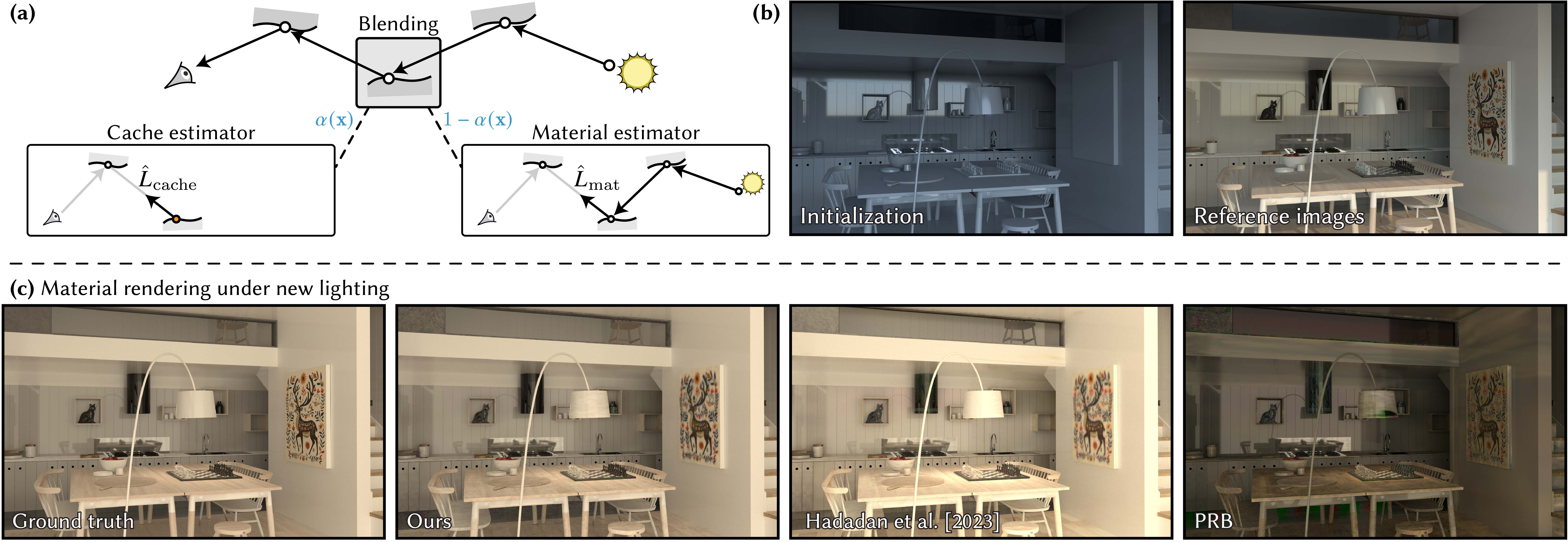
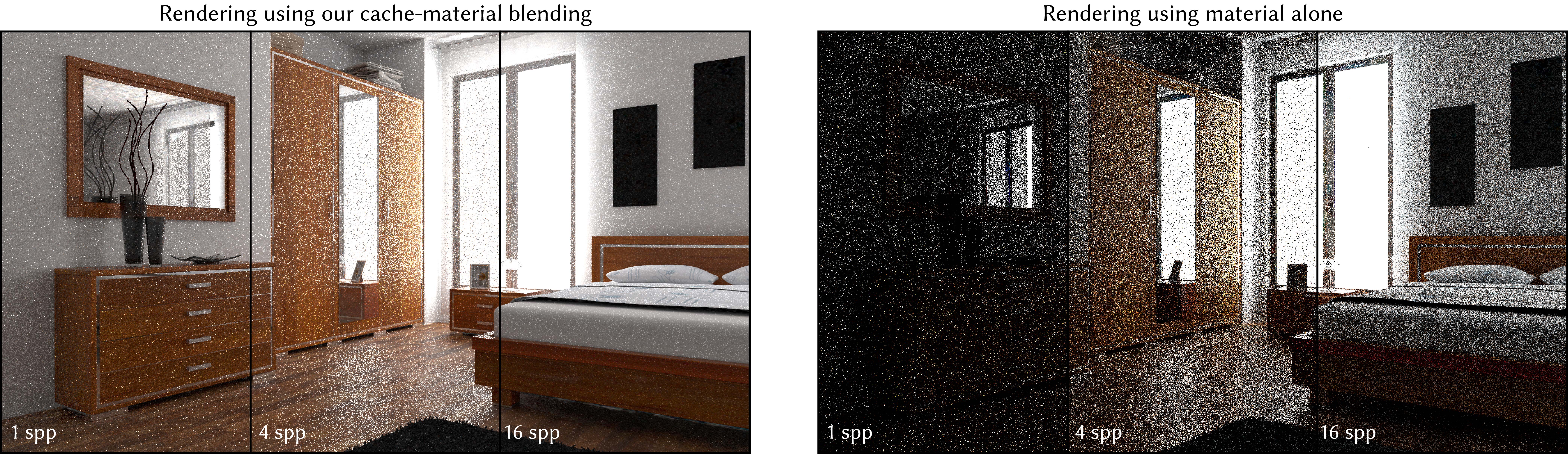
Differentiable path tracing offers a principled route to recovering physical material and lighting parameters, but the combination of high variance and poor numerical conditioning often makes it too brittle to use in practice. This is especially the case when lighting is altogether unknown, or when the scene contains complex light transport effects. Prior work recently showed that the variance reduction provided by a radiance cache can alleviate these challenges.
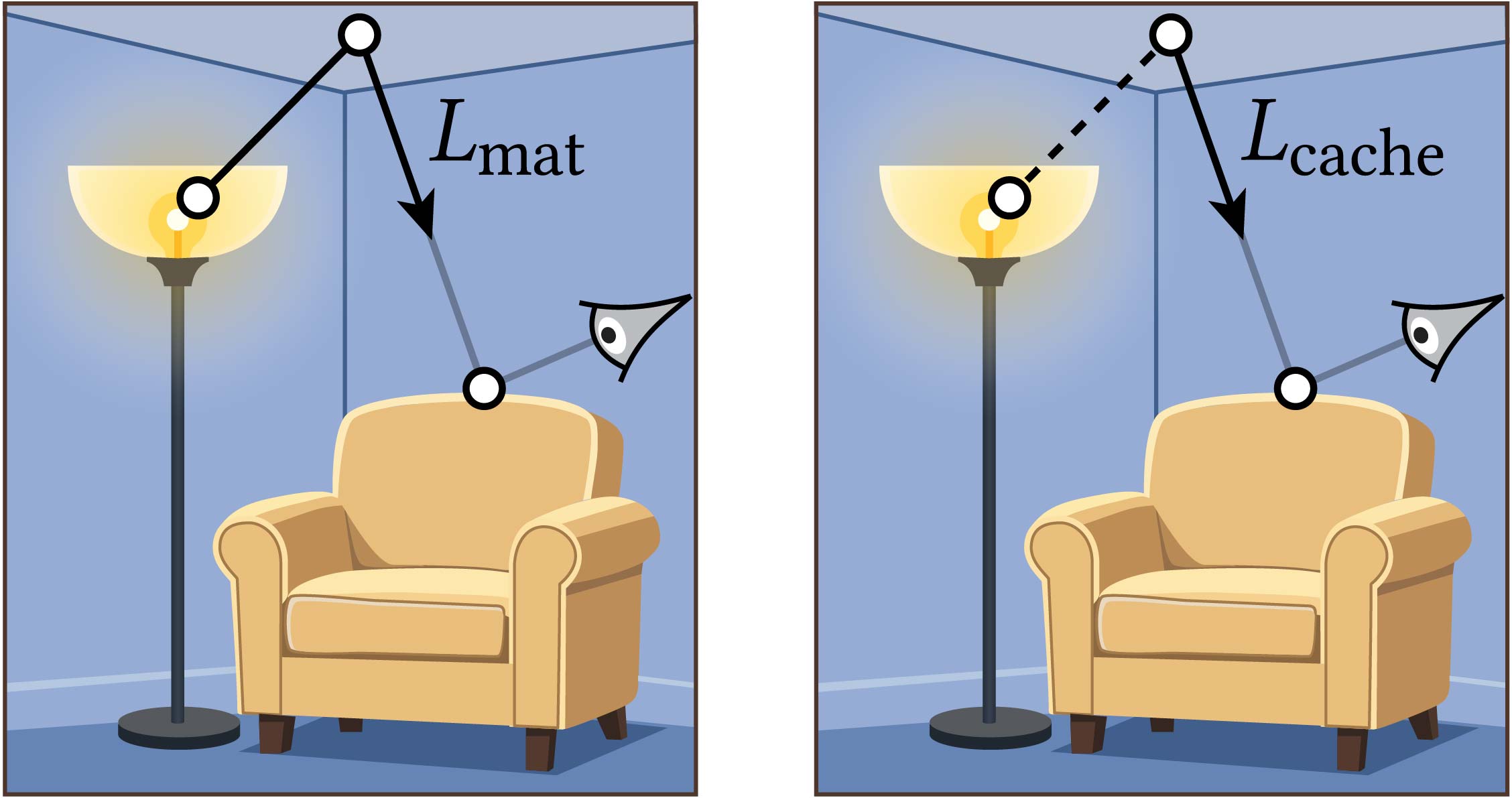
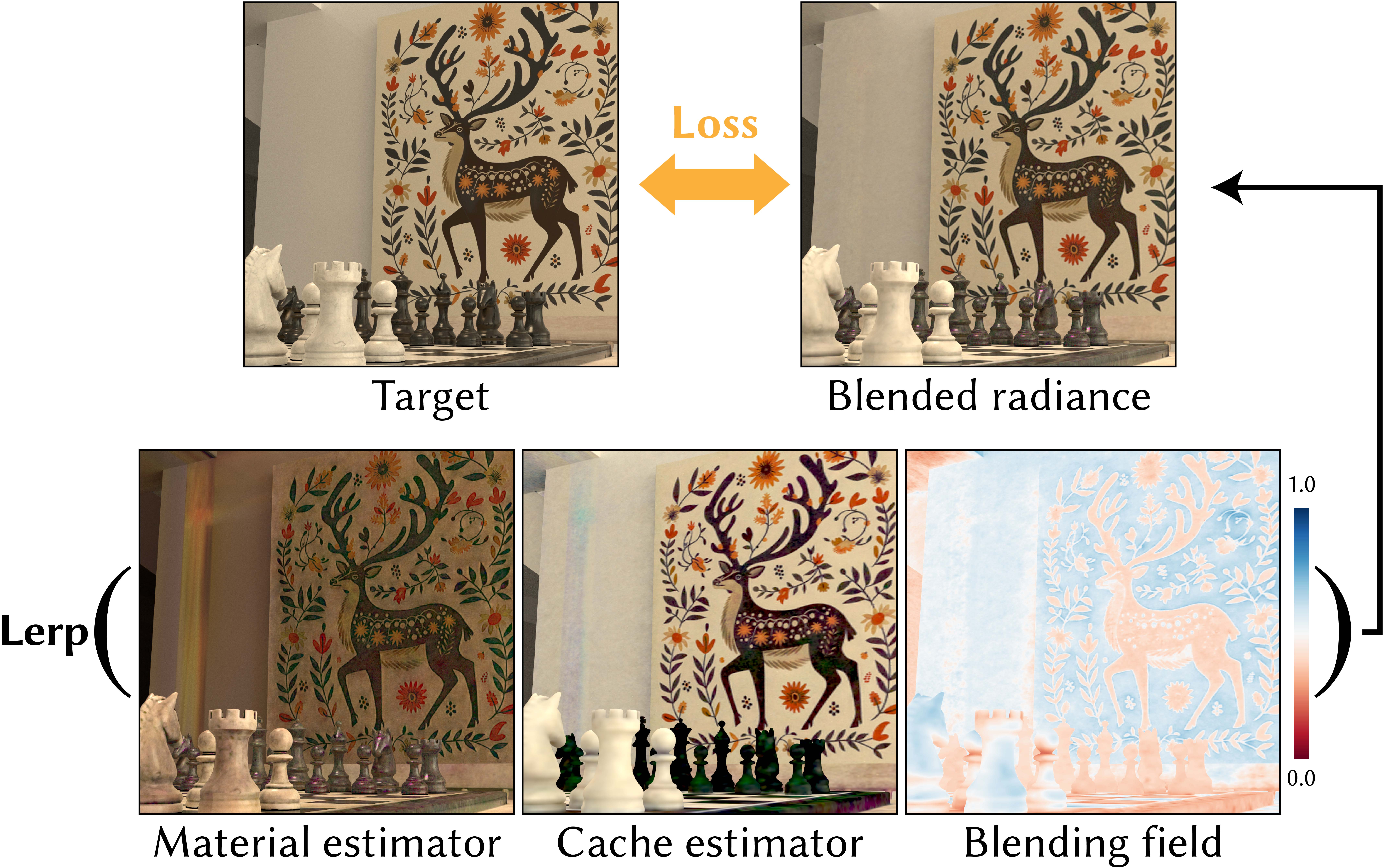
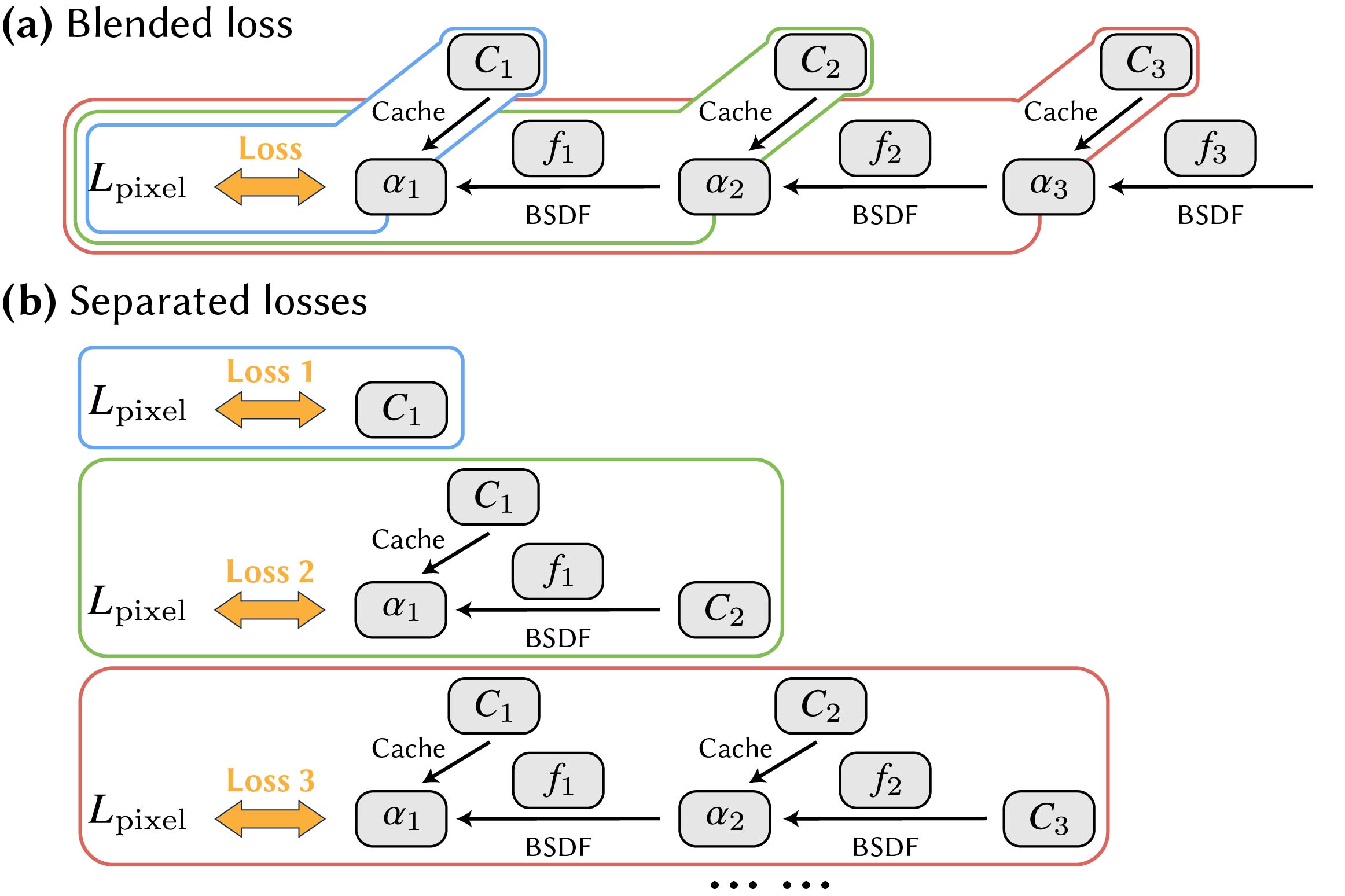
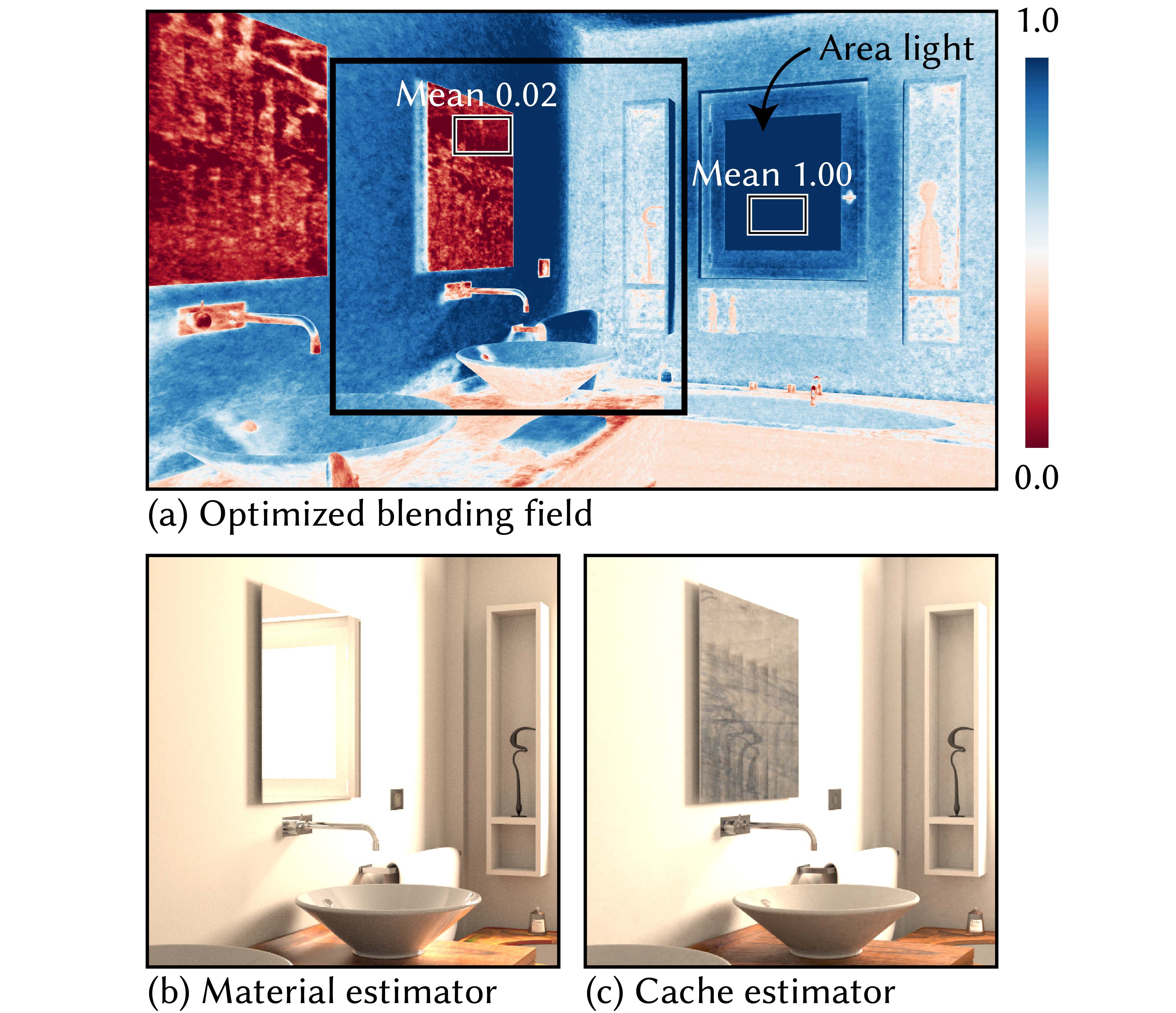
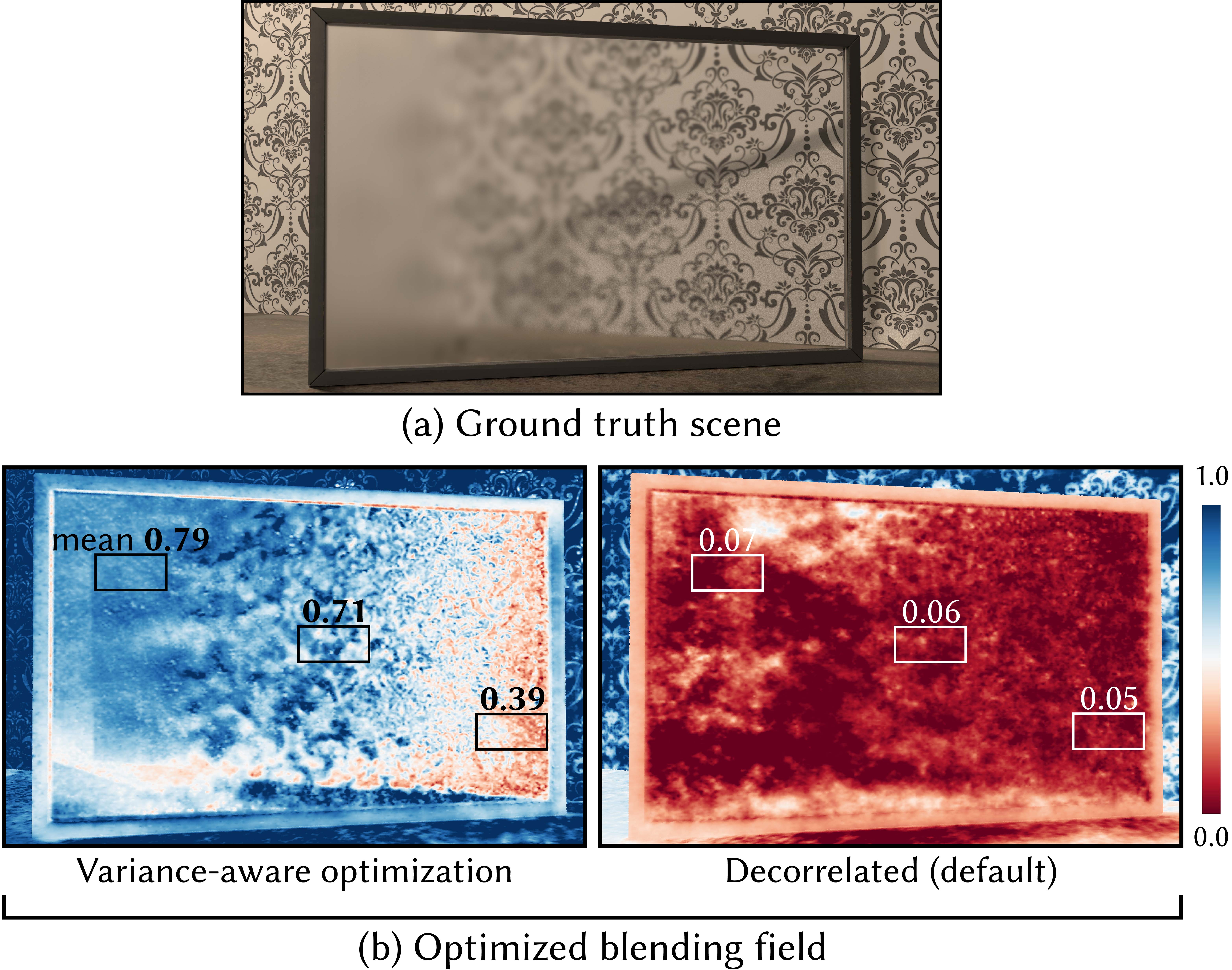
We revisit the combination of inverse rendering and radiance caching with a twist, by introducing a spatial blending field that locally interpolates between the cache and standard unbiased estimators. Recursive application of this idea yields a rich design space of evaluation strategies and inter-estimator consistency losses; we map this space and identify effective components. A surprising property of the resulting algorithm is that it can accurately recover material parameters even when the lighting is not uniquely identifiable from the observations. Our experiments demonstrate significant improvements in speed and robustness over prior work, making a strong case for including radiance caching as a standard component of future physically based inverse rendering systems.
Figures
Text citation
Ziyi Zhang, Delio Vicini, Sebastian Winberg, Stephan Garbin, and Wenzel Jakob. 2026. Radiance Caching for Differentiable Path Tracing. In Transactions on Graphics (Proceedings of SIGGRAPH) 45.
BibTeX
@article{Zhang2026Cache,
    author = {Ziyi Zhang and Delio Vicini and Sebastian Winberg and Stephan Garbin and Wenzel Jakob},
    title = {Radiance Caching for Differentiable Path Tracing},
    journal = {ACM Trans. Graph.},
    volume = {45},
    pages = {17},
    year = {2026},
    month = jul,
    doi = {10.1145/3811398}
}